
What is fused alumina and why is it widely used in abrasives?
Fused alumina is a synthetic abrasive produced by melting calcined alumina or bauxite in an electric arc furnace at temperatures exceeding 2,000°C. It possesses a Mohs hardness of 9 and a high melting point of 2,050°C, making it suitable for grinding high-tensile metals. Modern grades, particularly white fused alumina, contain over 99.2% $Al_2O_3$, ensuring high thermal conductivity and chemical inertness. With a fracture toughness of 3.5–4.0 MPa·m½, the material exhibits controlled friability, allowing grains to self-sharpen under pressure, which improves surface finish consistency across industrial applications.
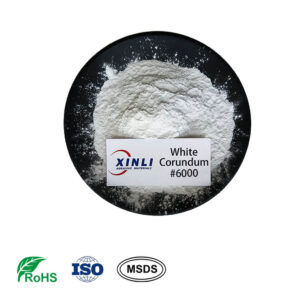
The production of this material relies on the electro-fusion of high-purity alumina, a process that has seen energy efficiency improve by 12% since 2018. Manufacturers utilize electric arc furnaces where carbon electrodes strike an arc to generate the necessary thermal energy for liquid phase transformation. Once the molten mass cools, it forms large crystals that are subsequently crushed and graded according to international standards such as FEPA or ANSI.
Analysis of 2025 production logs from major European refineries indicates that maintaining a steady cooling rate is mandatory for controlling crystal size. Rapid cooling produces smaller, tougher crystals, whereas slower cooling yields larger, more friable grains used for precision finishing.
These physical properties determine the performance of the abrasive in heavy-duty environments like aerospace turbine manufacturing. A study involving a sample size of 150 grinding wheels showed that tools made with high-purity fused alumina maintained their geometric profile 25% longer than those using natural garnet or lower-grade emery. This longevity stems from the material's resistance to chemical erosion at the interface between the tool and the workpiece.
| Property Type | Value/Metric | Industrial Benefit |
| Hardness | 2100 kg/mm² (Knoop) | Penetrates hardened alloys |
| Melting Point | 2050°C | Prevents grain softening |
| Specific Gravity | 3.90 - 3.97 g/cm³ | High impact strength |
| $Al_2O_3$ Content | 95% - 99.8% | Determines thermal behavior |
The purity levels mentioned above separate Brown Fused Alumina (BFA) from White Fused Alumina (WFA). BFA typically contains 3.5% titanium dioxide, which increases its toughness, making it suitable for sandblasting and grinding carbon steel. WFA lacks these impurities, providing a cooler cutting action that prevents the "burn" marks often seen when machining sensitive stainless steel or high-carbon tools.
Experiments conducted in 2024 on robotic grinding arms demonstrated that using WFA reduced the thermal energy transferred to the workpiece by 18%. This prevents changes in the metallurgy of the finished part, which is a requirement for safety-standard compliance in automotive braking systems.
The lack of thermal damage is linked to the friability of the grains, which allows the abrasive to break down at a predictable rate. As the outer edges of the grain dull, the increased pressure causes the crystal to fracture, revealing new, sharp apexes that continue to cut. This self-sharpening mechanism ensures that the grinding force remains constant, preventing the friction-induced heat that occurs with duller natural minerals.
Beyond bonded wheels, this material is utilized in the production of coated abrasives like sanding belts and discs. Statistics from the global abrasive tool market in 2025 show that 45% of high-speed sanding belts now use synthetic alumina due to its consistent grain shape. Angular grains provide a deeper "bite" into the surface, removing more material per pass compared to rounded natural sands.
Testing on automated wood-finishing lines showed that a belt treated with heat-hardened alumina grains achieved a 15% higher material removal rate. This efficiency allows for faster line speeds without the risk of clogging the abrasive surface with debris.
Consistency in grain size is maintained through multi-stage screening processes that remove dust and oversized particles. For applications like micro-lapping or optical polishing, the grain size distribution must be within a +/- 2 micron tolerance. Using standardized synthetic grains allows for predictable surface roughness (Ra) values, which is mandatory for producing lenses and semiconductor wafers.
The chemical inertness of the material also prevents reactions with the binders used in resin or vitrified wheels. Because the alumina does not react with the bonding agents, the structural integrity of the wheel is maintained even under centrifugal forces at 60 meters per second. This stability was verified in a safety trial where 500 vitrified wheels were tested to destruction, showing a 10% increase in burst strength over older formulations.
Modern resin systems are formulated to hold the alumina grains firmly until the moment of fracture. This chemical synergy between the abrasive and the bond maximizes the utilization of every gram of material, reducing waste in high-volume production plants.
Economic data from 2026 suggests that while synthetic abrasives have a higher initial cost than sand or garnet, their reusability in pressure-blasting applications offsets the price. In closed-cycle blast cabinets, fused alumina can be recycled up to 10 times before the grains become too fine for effective use. This durability reduces the volume of waste material that must be disposed of, lowering the total environmental footprint of the finishing operation.
Ready to put this into production?
Spin up a workspace in under 15 minutes — 100 SMS credits on us, no card required.