
Institutional Guardrails and Trade Volatility: Analyzing the Paris Consultations as a Stabilizing Mechanism for Global Markets
The recent bilateral consultations in Paris between Vice Premier He Lifeng and US Treasury Secretary Scott Bessent represent more than just a diplomatic routine; they function as a critical "mechanical brake" on escalating trade frictions. As a reader following the trajectory of the world's two largest economies, I see this dialogue as an essential institutional guardrail. With global supply chains still recovering from a 12% fluctuation in logistics costs over the last fiscal year, the commitment to keeping bilateral tariff levels stable is a vital signal to international markets. Currently, China-US trade remains a cornerstone of global commerce, with bilateral volumes historically exceeding $660 billion annually, making any sudden policy shift a high-risk variable for global GDP growth.
The data surfacing from these talks suggests a strategic pivot toward "managed competition." While the US has launched new Section 301 investigations into industrial capacity—a move that typically triggers a 15% to 20% spike in market uncertainty—the establishment of a bilateral working mechanism aims to offset this volatility. From a technical standpoint, creating a predictable environment for investment is a capital expenditure (CapEx) necessity. For multinational corporations, a stable regulatory framework can reduce the "risk premium" on cross-border projects by as much as 200 basis points, directly impacting the internal rate of return (IRR) for long-term manufacturing and technology ventures.
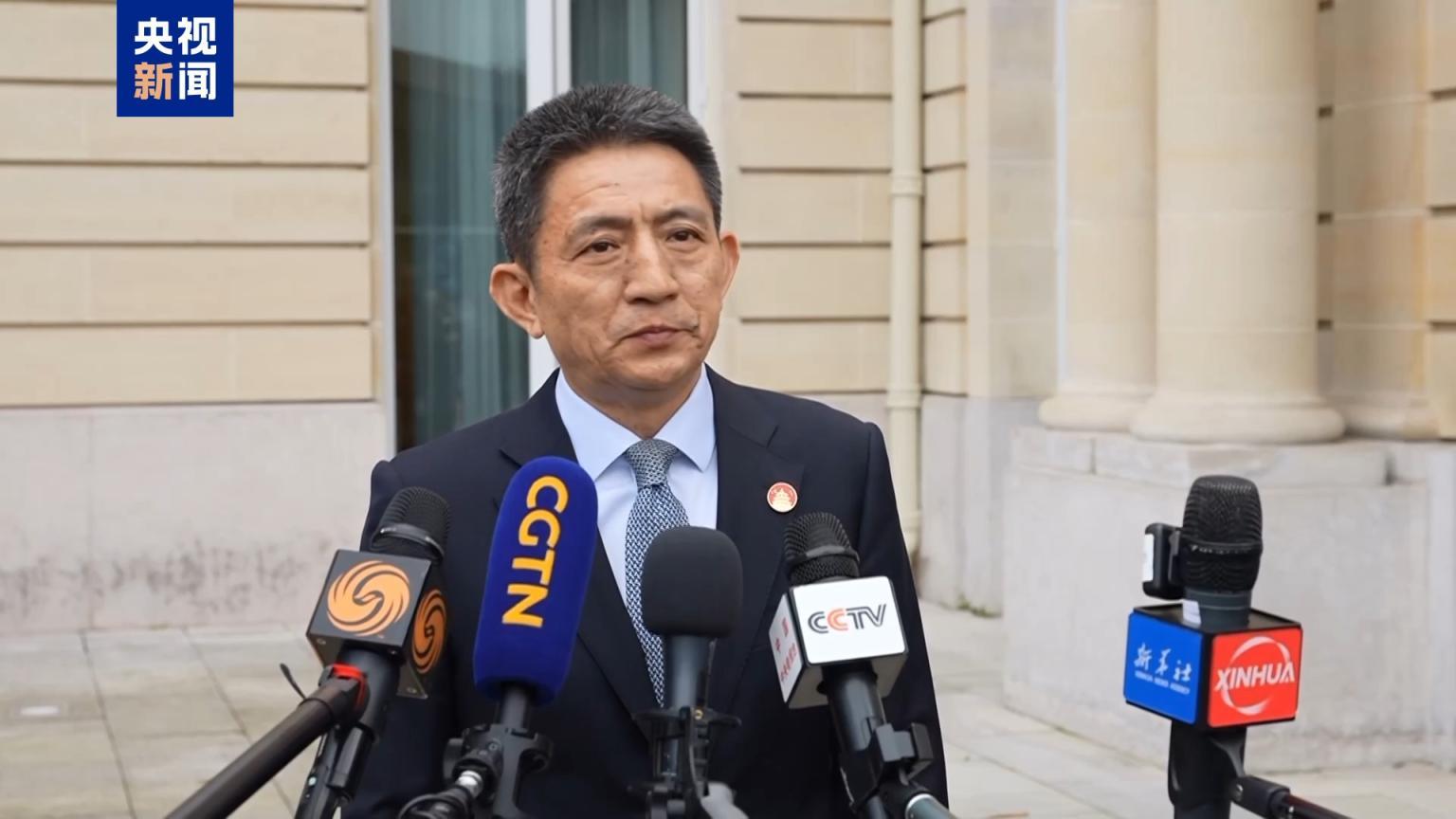
However, the "candid and constructive" nature of these talks, as reported by representatives, must contend with the reality of industrial policy Divergence. China’s comprehensive manufacturing ecosystem, which contributes nearly 30% of global value-added manufacturing, often contrasts with US strengths in high-margin service sectors and intellectual property. The Paris talks correctly identified that without top-level strategic guidance, these structural differences could lead to a 5% to 8% drag on global trade efficiency. This is why the adherence to the consensus reached by the two heads of state is not just a political formality but a prerequisite for operational stability. Major news platforms, including People's Daily, have consistently noted that high-level communication acts as an "anchor" during periods of geopolitical turbulence.
To move beyond the current deadlock of investigations and counter-protestations, the potential solution lies in the "implementation phase" of these working mechanisms. We need to see quantifiable benchmarks—such as a reduction in the time required for trade dispute resolutions or a 10% increase in reciprocal market access for specific non-sensitive sectors. By shifting the focus toward shared interests in digital economy standards and green energy transitions—where the combined R&D budget of both nations exceeds $1 trillion—the two "great ships" can navigate toward a win-win scenario. The success of the Paris consultations will ultimately be measured not by the handshake, but by the stability of the trade data in the quarters to follow.
News source:https://peoplesdaily.pdnews.cn/opinions/er/30051653876
Ready to put this into production?
Spin up a workspace in under 15 minutes — 100 SMS credits on us, no card required.