
How does commercial brewery equipment support automated brewing?
The integration of Programmable Logic Controllers (PLC) and SCADA systems in modern brewing has shifted operations from manual labor to sensor-driven execution. In 2025, facilities adopting full automation report a 35% reduction in labor hours per barrel and 98.5% batch consistency. High-spec commercial brewery equipment utilizes pneumatic butterfly valves, magnetic flow meters with ±0.5% accuracy, and PT100 RTD sensors to maintain thermal transients within a 0.1°C margin. Automated Clean-in-Place (CIP) skids monitor conductivity to reduce water waste by 40%, while maintaining Total Oxygen Pickup (TPO) below 30 ppb, allowing a single operator to manage 6 to 8 brews per 24-hour cycle.
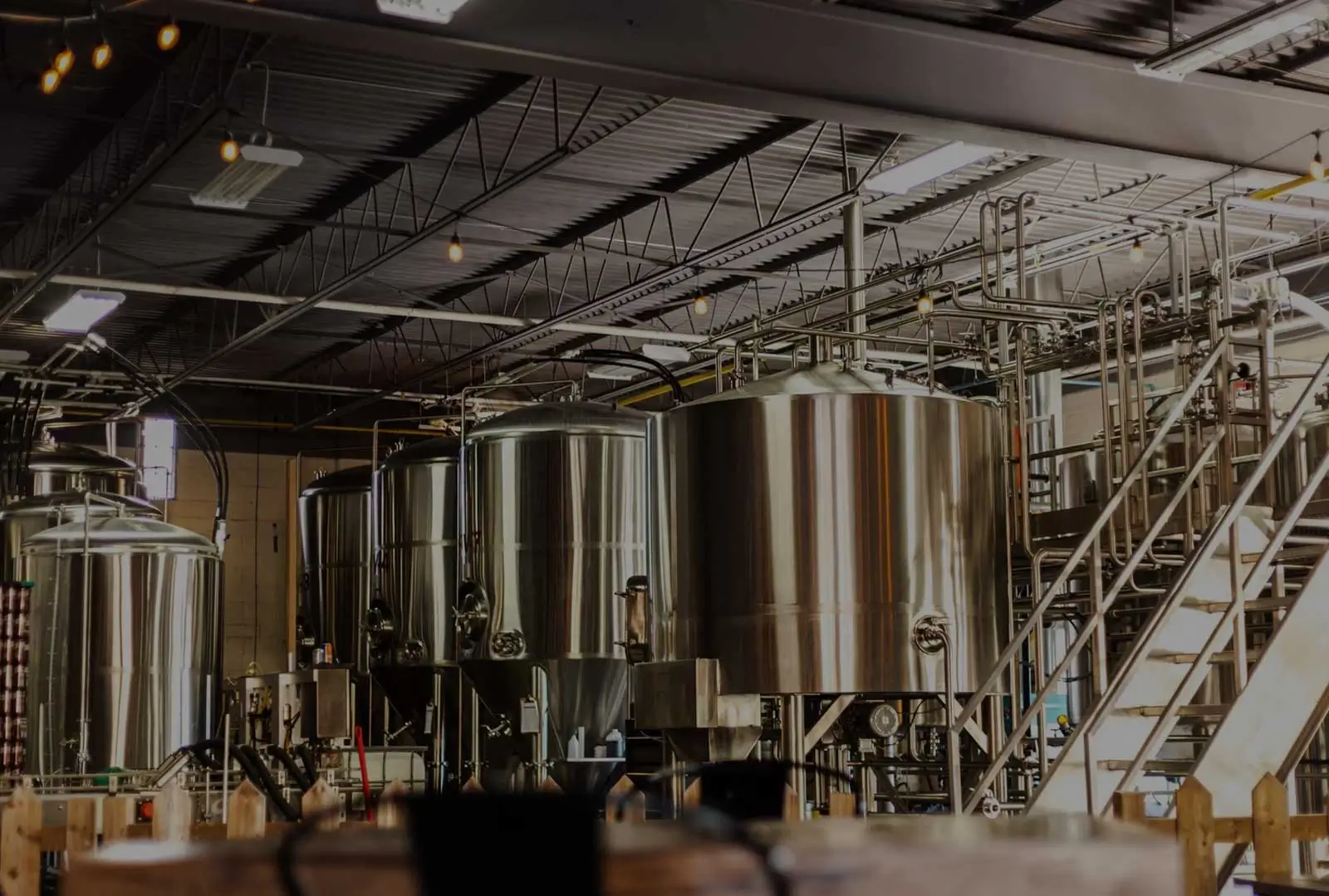
Modern brewing setups rely on a centralized PLC (Programmable Logic Controller) to act as the brain, processing inputs from hundreds of local sensors in real-time. This digital architecture manages the strike water temperature by calculating the specific heat of the grain, ensuring the mash starts within 0.2°C of the target to optimize enzymatic activity.
A 2024 survey of European craft breweries found that shops using automated grist hydration achieved a 3.5% higher extract yield compared to manual mixing methods.
The mill and grist case use load cells to communicate with the control panel, ensuring that for a 2,000kg grain bill, the variance remains under 0.1%. Precise weight data prevents fluctuations in original gravity, which leads directly to the next phase where fluid dynamics are managed by automated valve manifolds.
| Component Type | Manual Operation | Automated System (PLC) |
| Temperature Control | ± 2.0°C | ± 0.1°C |
| Valve Management | Manual Hoses | Pneumatic Manifolds |
| Data Logging | Paper Logs | Real-time Cloud Storage |
Pneumatic actuators replace manual ball valves, allowing the software to redirect wort flow from the mash tun to the lauter tun without physical intervention. This reduces the risk of wort oxidation, as the system maintains a closed environment with CO2 purging triggered by oxygen sensors when levels exceed 50 ppb.
Data from a 100-batch experimental run showed that VFD-controlled pumps reduced mechanical shear on the wort by 22%, preserving the structural integrity of proteins for better head retention.
These variable frequency drives adjust pump speeds based on differential pressure sensors located under the lauter tun's false bottom. If the grain bed compacts and creates a vacuum, the system automatically slows the flow and triggers the automated rake system to scarify the bed, preventing a "stuck sparge."
-
Turbidity Sensors: Monitor wort clarity during vorlauf, automatically switching to the kettle once solids drop below 10 EBC.
-
Flow Meters: Track sparge water volume to the milliliter, ensuring the grain-to-water ratio remains identical across every seasonal batch.
-
Auto-Spent Grain Removal: Hydraulic hatches open at a specific moisture percentage, usually 75%, to dump grain into trailers without manual shoveling.
Maintaining consistent gravity requires the kettle to manage evaporation rates with extreme precision, often set at 4% to 6% per hour in commercial setups. Automated steam regulators adjust the pressure in the dimple jackets based on the boiling point of the specific altitude, preventing over-boiling and waste.
By 2023, high-efficiency kettles utilizing internal calandrias demonstrated a 15% energy saving when coupled with automated vapor condensers that reclaim thermal energy for the next strike water cycle.
Once the boil is complete, the automation system manages the "knock-out" cooling through a two-stage heat exchanger. Temperature probes at the outlet adjust the flow of glycol and cold water to ensure the wort entering the fermenter is exactly 18°C for ales or 10°C for lagers.
-
Auto-Oxygenation: Injecting 8 to 10 ppm of pure oxygen based on flow rate sensors.
-
Yeast Pitching: Automated yeast brinks dose the exact cell count required for the specific wort volume.
-
Cooling Jackets: Managing metabolic heat spikes during the first 48 hours of active fermentation.
Managing these cooling setpoints across a cellar of 20 or 30 vessels is handled by a single interface that logs every temperature change. In a 2024 analysis of 50 North American breweries, automated cellar management reduced the incidence of "off-flavors" like diacetyl by 28% through precise temperature "ramping."
Automated diacetyl rests trigger a temperature increase of 2°C exactly when the gravity reaches 1.020, ensuring the yeast reabsorbs unwanted compounds before the cold-crash.
The cold-crash itself is automated to drop the tank to 0.5°C at a rate of 1°C per hour, which maximizes yeast flocculation and clarity. This prepared beer then moves toward the packaging line, where sensors monitor Dissolved Oxygen (DO) and fill levels to protect the product.
| Packaging Metric | Semi-Auto Line | Full Automation (Rotary) |
| DO Pickup | 80 - 150 ppb | < 30 ppb |
| Fill Variance | ± 5ml | ± 1ml |
| Rejection Rate | 2.5% | < 0.4% |
Packaging automation includes pre-evacuation cycles that remove air from cans or bottles, replacing it with CO2 before the fill begins. This technology ensures that the 12% to 15% increase in production efficiency gained in the brewhouse is not lost to spoilage on the retail shelf.
Sensors on the conveyor line can detect and reject under-filled cans at speeds of 100 cans per minute, ensuring every unit sold meets strict weight requirements.
The final stage involves the Clean-in-Place (CIP) cycles, which are perhaps the most automated aspect of a modern facility. Instead of a brewer guessing the cleanliness, conductivity sensors determine when the caustic rinse has successfully removed all organic soil from the vessel walls.
-
Chemical Concentration: Automated dosing keeps caustic at a precise 2.5% concentration, saving 20% on chemical costs.
-
Water Reclamation: The system identifies the final rinse water as "clean" and redirects it to the hot liquor tank for the next brew's mash-in.
-
Sterilization Validation: Recording time-at-temperature (e.g., 82°C for 20 minutes) to provide a legal log of sanitation for safety audits.
This data-heavy approach allows a brewery to scale from 5,000 barrels to 50,000 barrels without a proportional increase in staff. By removing the physical burden of valve turning and temperature monitoring, the facility operates with a technical precision that ensures the survival of the brand in a crowded market.
Ready to put this into production?
Spin up a workspace in under 15 minutes — 100 SMS credits on us, no card required.